
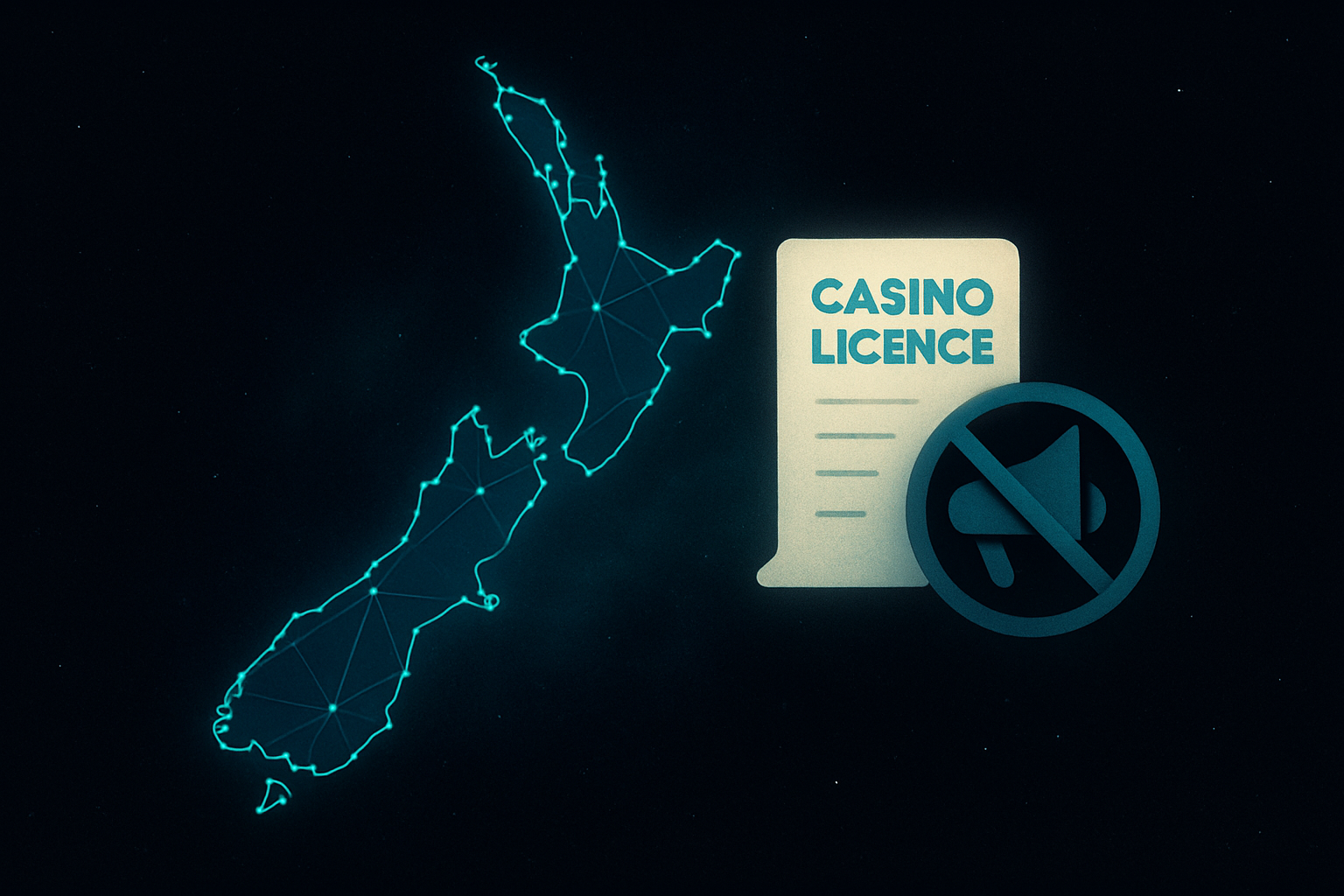
SkillOnNet has become one of the operators cleared to offer online casino services in New Zealand, securing its licence for the PlayOJO brand as the country’s regulated market takes shape. The milestone lands days after the Problem Gambling Foundation (PGF) called for a blanket ban on gambling advertising before the market opens to consumers. Together, the two developments show how New Zealand online casino regulation is moving quickly on licensing while the rules governing player acquisition remain unsettled.
What happened
SkillOnNet became the 11th operator to secure a licence under the Online Casino Gambling Act, which came into force in May 2026, paying an $8.51 million licensing fee and overcoming a field of 32 bidders.
The licence allows the company to launch online casino services locally, and it plans to build its presence in the market through its PlayOJO brand.
SkillOnNet’s progress follows an earlier stage of the process in which a wider group of companies won the right to apply for licences.
A total of 11 companies won the right to apply for New Zealand’s new online casino licences, including Baytree Interactive, owned by Super Group, which secured three rights to apply, while Entain’s subsidiary Playvia Gaming, Rock Swift Group and SkyCity each secured two.
Operators that failed to secure application rights, or did not take part in the auction, must cease all online casino operations in the country by 1 December 2026.
Separately, the PGF has stepped up pressure on regulators over how licensed operators, and the offshore sites still active in the market, will be allowed to advertise.
The foundation has called for a ban on gambling advertising ahead of the country’s regulated online casino launch, warning that offshore operators continue to breach existing restrictions and reach people experiencing gambling-related harm.
Advocacy director Andree Froude told RNZ’s Morning Report that overseas gambling companies had used social media, influencers and other promotional tactics to attract New Zealand customers despite restrictions on advertising their services.
Under current rules, overseas gambling operators are prohibited from advertising directly to New Zealand consumers, with fines of up to NZ$10,000 upon conviction.
Froude argued that such a fine offers a limited deterrent without strong enforcement.
New advertising requirements for authorised operators are scheduled to take effect in June 2027.
Why it matters
The New Zealand online casino market is one of the last sizeable English-language jurisdictions to move from an unregulated offshore model to a licensed domestic one. For operators such as SkillOnNet, winning a licence secures a first-mover position in a market that has previously been served almost entirely by offshore brands.
The advertising dispute matters just as much commercially.
The Problem Gambling Foundation says operators’ past breaches should influence their eligibility for domestic online casino licences.
That raises the prospect that marketing conduct before launch could affect which brands are allowed to operate after it. For affiliates and performance marketers building New Zealand-facing campaigns, the gap between now and the June 2027 advertising rules creates uncertainty over what channels, from social media to influencer partnerships, will remain usable once the full regime is in force.
The bigger picture
New Zealand’s experience mirrors a pattern seen in other markets that have recently formalised online casino regulation: licensing moves ahead of a settled advertising framework, leaving a transitional period in which enforcement is inconsistent.
Froude told RNZ’s Morning Report that offshore gambling operators have routinely disregarded New Zealand’s advertising restrictions, using social media, influencer partnerships, promotional cash offers and even physical tagging on buildings to reach local audiences.
Regulators in other recently opened markets have faced similar criticism that enforcement lags behind commercial activity.
For SkillOnNet, the New Zealand licence adds to a network that already spans multiple regulated jurisdictions through its PlayOJO brand and sister sites, extending the group’s international footprint at a time when several European affiliates and operators are also pursuing new market entries to offset pressure at home. Readers can find more coverage of licensing and market entry developments in our industry news section.
Sources
- GamblingNews – SkillOnNet Jostles for Position in New Zealand as It Gains License
- GamblingNews – New Zealand RG Advocacy Group Urges Ban on Gambling Ads
- World Casino Directory – New Zealand Gambling Ad Ban Calls Grow Ahead of Casino Launch
- Focus Gaming News – Campaigners call for tougher enforcement of New Zealand online casino ad rules
- Focus Gaming News – 11 companies granted right to apply for New Zealand online casino licences
- G3 Newswire – SkillOnNet advances to next stage of New Zealand online casino licensing process
Leave a Reply